Kyoto Popular Experience5.0 (104)36 Verified PhotosOfficial Operator: 김 재훈
[Private car tour⎮No additional charge!] Kyoto private car tour⎮With parents and children
Experience Highlights & Key Perks
I promise you a trip like this.✔ Local know-how from 25 years of living in Japan ✔ Private car tour with only one team per day ✔ Transparent price with no additional fees ✔ Leisurely itinerary tailored to family travel with parents and children ✔ Recommended restaurants and travel destinations based on local life experience ✔ Support for taking family photos and portraits during the trip We will be with you during your precious day in Kyoto.
- I am Kim Jae-hoon, a Korean guide who has been living in Japan for 25 years with his Kyoto-born wife, guiding Kyoto, Kobe, Nara, and Osaka.
- I have a gold driver's license, and I value the safety and comfort of travelers above all else.
- “For me, traveling is not about seeing a lot of tourist attractions, but about having a day together that will remain as good memories for a long time.”
- We will make your trip as comfortable and stress-free as if you were traveling with someone you have met for the first time but have known for a long time.
- Even in the same place, Kyoto feels different depending on who you travel with and at what speed.
Verified API Rate HistoryObserved 1d
Real API Benchmark: Daily recorded 1-adult voucher rate
2026-11-08$74
Recorded Low$74
Recorded Avg$74
Recorded High$74
Day-1 API Rate Recorded (2026-11-08) — Daily History Accumulating
StayChart never fabricates synthetic past price curves. Starting from today’s verified API snapshot, real daily rate observations are automatically recorded every 24 hours.
Full Experience Details & Guide
We will make your trip as comfortable and stress-free as if you were traveling with someone you have met for the first time but have known for a long time.
I promise you a trip like this.
✔ Local know-how from 25 years of living in Japan ✔ Private car tour with only one group per day ✔ Transparent pricing with no additional fees ✔ Leisurely itinerary tailored to family travel with parents and children ✔ Recommendations for restaurants and travel destinations based on local life experience ✔ Support for taking family photos and portraits during travel
This tour will help you experience Kyoto more slowly and more comfortably, tailored to your situation and condition.
We will be with you during your precious day in Kyoto.
✼We will prepare a separate travel plan for kimono, toroko train, and boating experiences.
Travel Plan B Course 9 hours (based on departure and arrival in Osaka City)
Scheduled to arrive at accommodation at 18:00
✼ We will create a separate travel plan for kimono, toroko train, and boating experiences.
I recommend it to these people!!!
✔️ Those who want to enjoy a private tour with their group
Step-by-Step Tour Itinerary
- 1
Arashiyama (Wind Mountain)
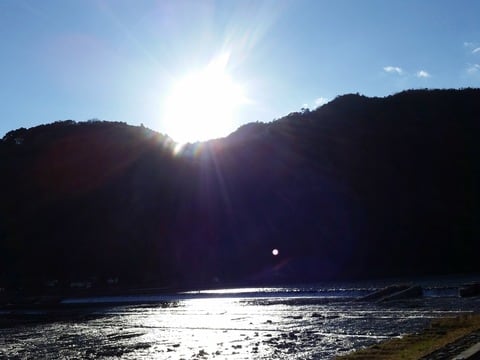
Takes 20 minutesA place with the best scenery and nature that was used as a villa by Japanese nobles! It has been famous as a pleasant place to enjoy the beautiful natural environment since the Heian period (794-1185), and since it became a villa for nobles, it has become a representative tourist destination in Kyoto.It was developed as a villa for nobles, and until just a few years ago, it was a hidden secret area of Kyoto that only those who knew about in the spring and fall enjoyed beautiful scenery filled with beautiful cherry blossoms and autumn leaves. However, it is now known to many people, and it is hard to stop by during the cherry blossom and autumn leaves season.
- 2
Togetsukyo
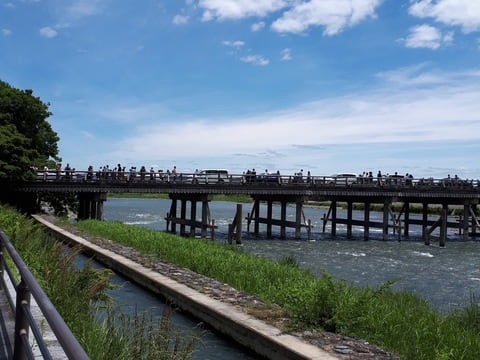
Takes 20 minutesIt was named so because it resembles the moon crossing a bridge. A bridge that offers a panoramic view of Arashiyama. It is a beautiful wooden bridge that can be said to be a symbol of Arashiyama. It is a long bridge with a total length of 154m. It is said that Kameya was named Togetsu Bridge because it looks like an infinitely bright moon is hanging over the bridge.
- 3
Bamboo Forest Chikurin
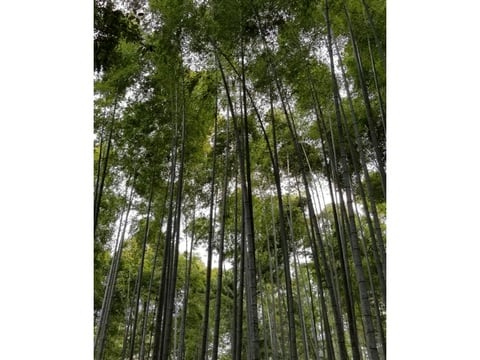
Takes 20 minutesDuring the Heian period, when aristocratic culture began to take root, aristocrats who loved the arts rushed to build villas, making it a beautiful tourist destination where the mountains, rivers, and sky were in harmony.The biggest attraction of Arashiyama is its beautiful scenery and perfect feng shui conditions. It is also the place where the previous emperor of Japan lived, making it as famous as its history.The Bamboo Forest Trail is a walking path with bamboo forests on both sides, and it reminded me of Soswaewon and Juknokwon in Damyang, Korea.Numerous tourists strolling along the bamboo forest path, rickshaws carrying tourists, and newlyweds who look like they just got married walking down the street wearing formal attire are fun to see not only nature but also people. The biggest attraction of Arashiyama is the beautiful scenery and the perfect feng shui conditions. It is also the place where the previous emperor of Japan lived, making it as famous as its history.The movie “Memoirs of a Geisha” was also filmed on the bamboo forest path here.
- 4
Tenryu-ji (old Japanese royal villa)
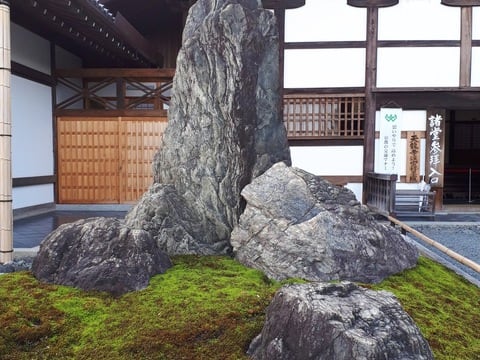
Takes 30 minutesIt is a villa of the old Japanese royal family and is also registered as a UNESCO World Heritage Site.It is said that Tenryu-ji was originally built as a royal villa in 1225, but was renovated into a temple for Emperor Go-Daigo in 1399.It is said that there was a reason why the temple was so beautiful as it was a royal villa.It is no exaggeration to say that the reason UNESCO supported Tenryu-ji Temple was purely because of Sogenchi Garden.Sogenchi is the name of the pond in the center of the garden, and it is derived from the word ‘Sogenchi itteki’, which is said to mean ‘a drop of water is the source of life and the source of all things.’
- 5
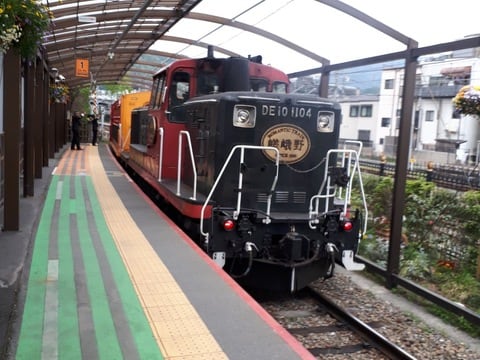
Torokko Gorge Train
Takes 70 minutesThe vividness of Mother Nature after passing through the canyon.And the railroad brings back old memories. It is a small freight train originally used for freight transport.It is also a train that was brought back to life after being killed in March 1989 by the West Japan Railway Company (JR West), which was abolished after being converted to a new line to prepare for electrification and double-tracking, with an average speed of 25 km/h.Cherry blossoms in the spring, fresh greenery in the summer, autumn leaves in the fall, and snow in the winter. This is the best sightseeing train where you can enjoy different scenery in each season! It is a train that runs between the distant cliffs along the cliffs of the valley. It takes about 25 minutes to cover the approximately 7.3km section that connects four stations.
- 6
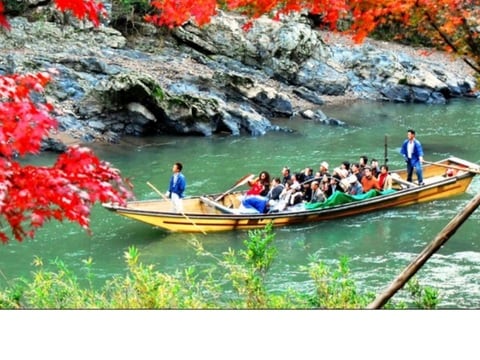
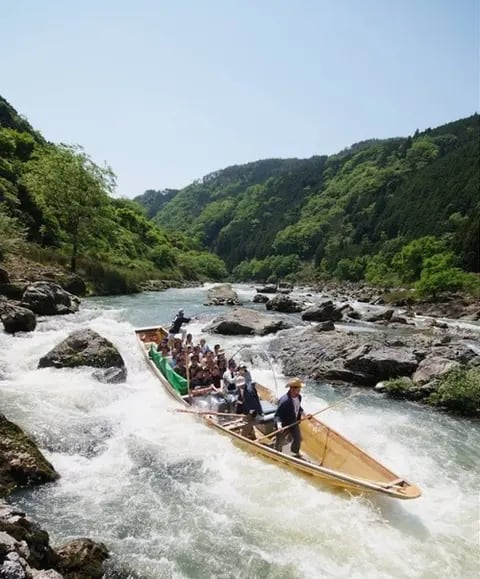
Hozugawa Kudari (boat ride)
Takes 180 minutesIt flows 16km through a mountainous gorge, reaches Arashiyama, a scenic spot in the world, and joins the Kamo River into the Yodogawa River.This river, from Kameoka to Mt. Sagaarashi (Ukyo-ku, Kyoto City), is called the Hozu River, famous for the beauty of its gorge and downstream.Nature shows various faces throughout the four seasons, including rocky mountains, pine mountains, scrub mountains, cherry blossoms, and autumn leaves. On both sides of the river, there are mountains piled up in layers, and Mount Atago (dedicated to the god of fire) rises at the highest peak, and as the river turns from right to left through the valley, it flutters in front of the boat.However, the natural beauty of Hotsugawa Gorge is outstanding throughout the four seasons, and the ever-changing scenery, including huge rocks and other surrounding mountains, splashing water, and a mirror-like pond that commemorates mysteries, is truly captivating.Therefore, it is said that river boats carrying tourists as pleasure boats began around 28 AD in the Meiji era.
- 7
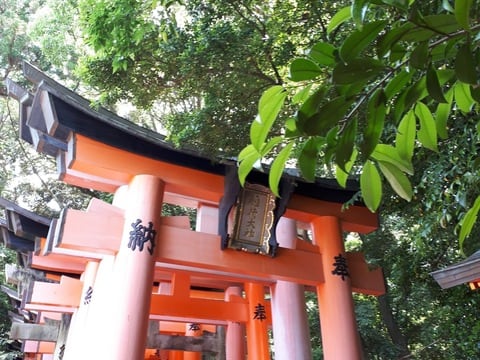
Fushimi Inari (Fox Shrine)
Takes 40 minutesFushimi Inari Shrine (Fox Shrine) has been ranked first for six consecutive years by Trip Advice, the world's largest travel site.A shrine in southern Kyoto, Japan.It is the headquarters of the Inari Shrines spread across the country that worship Inari, the god of rice, agriculture, and success, and is also famous for the thousand torii gates featured in director Steven Spielberg's film Memoirs of a Geisha.As a shrine dedicated to the god of rice, this shrine with an oriental feel is one of the most visited shrines in Japan. The beautiful forest path lined with maple trees leading up Mt. Inari is said to have been a pilgrimage route for Japanese people for the past 1,300 years.It is also called Senbon-dori (Senbon-dori) because there are thousands of red torii gates erected to express prayers and gratitude.What makes this natural beauty even more impressive is the torii road, with its red-painted pillars winding from the base of the mountain to Fushimi Inari Shrine at the top.
- 8
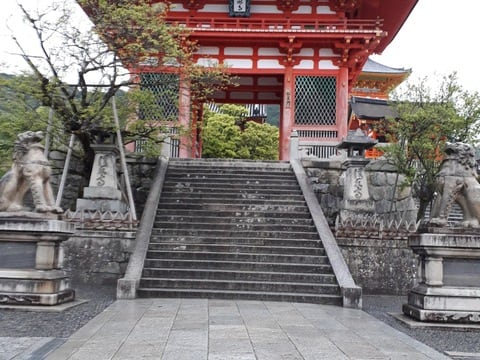
Kiyomizu-dera (Cheongsu-ji Temple)
Takes 50 minutesThis is a temple in Kyoto, southern Kyoto Prefecture, Japan.This temple is located on a cliff halfway up Mt. Otowa. It looks precarious before you enter the temple, but once you enter, you feel refreshed by the expansive view.When viewed from the veranda of the main temple, Kiyomizu-nobutai, which juts out over a steep cliff, you can see the cityscape of Kyoto at a glance, and the scenery in all four seasons is especially famous for its spectacular scenery.Below the main temple, inside the temple with a cliff of 15 meters, there is Otowa Falls, where drinking Jishu Shrine is said to be beneficial for health, studies, and love.It is said that the temple was founded here when Enchin Daishi, who discovered Otowa Falls, placed a statue of Kannon here in the 8th century.It is said that the name Kiyomizu (淸水) also originated from here.It is said that if you have a wish to come true, you should drink the water from Otowa Falls.It is a place with beautiful scenery in all four seasons, but the cherry blossoms are in full bloom in April and the autumn leaves turn beautifully from late November to early December, making it one of the places that attracts more tourists.It is said to be a temple built by Enchin, a monk from Nara, in 780.
- 9
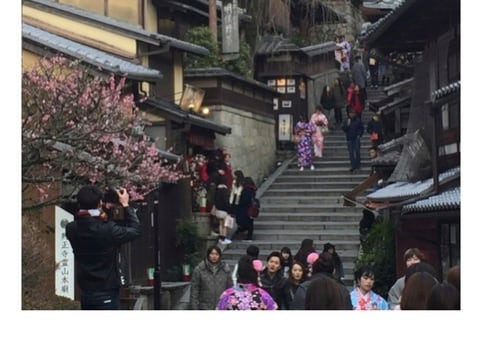
Sannen Jaka
Takes 40 minutesSannen-zaka is so named because it was built in the 3rd year of Taido (808).There are 46 stone steps in Sannenzaka, and an interesting rumor is said to have spread about them.Believe it or not, if you fall here, you will die within 3 years, and it is said that there was even a store selling calabash for soldering your teeth.Even now, calabash is sold as souvenirs.
- 10
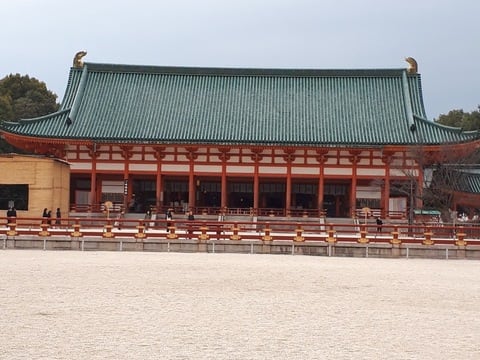
Heian Jingu Shrine
Takes 20 minutesHeian Jingu is a shrine built to commemorate Kyoto's 1,100-year history as the capital of Japan.Unlike other buildings, it is very ornate, with the red pillars and blue roof creating a clear contrast.Shinen, meaning ‘Garden of God’, is a place with beautiful scenery. It is divided into four areas, and there are cherry trees in bloom around the water, making it a great place to take pictures.Cherry blossoms are in full bloom in spring and irises are in full bloom in summer, so it is best to visit in spring or summer.It is repainted every year, so its vivid scarlet color contrasts sharply with the white sand on the floor, making it instantly recognizable from afar.
- 11
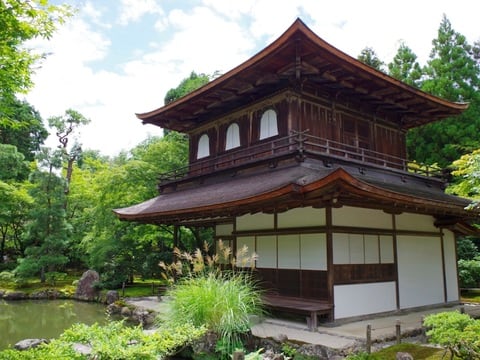
Silver Pavilion
Takes 30 minutesThe original name is Higayama Jishoji, but it is shortened to Jishoji.The name ‘Kinkakuji’ is an unofficial name, and is said to have been widely used since the Edo period.It is currently designated as a national treasure of Japan.The garden is landscaped using white sand, which is popular as a specialty of Kinkakuji. This sand garden is called Ginshadan, and the pile of sand carefully piled up on one side of the garden is said to be a structure made to reflect moonlight. On December 17, 1994, the entire Ginkakuji Temple was destroyed.It is designated as a World Cultural Heritage site, and the Kinkaku and Togudo within Kinkakuji are designated as national treasures of Japan.Inside Dogudo, there is a tea room called Dojinsai, which is said to be the oldest existing Seowon building.The garden is a special historic site and a special scenic spot.
- 12
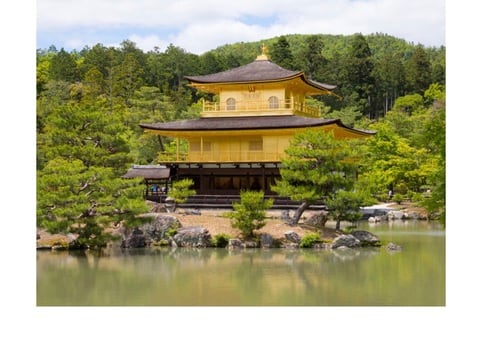
Golden Pavilion
Takes 30 minutesGolden Pavilion, a symbol of Kyoto along with Cheongsu Temple!Its original name was Nokwonsa Temple, but it became more widely known as Ginkaku because of its three-story reliquary pavilion gilded with 20 kg of pure gold, and came to be called Ginkakuji.It burned down in 1950, and the current building was rebuilt in 1955.The gold leaf was put on again in 1962 and again in 1987, and since then it has been repaired every year with taxes from Kyoto citizens. It is said that the reason why Kinkaku-ji became widely known in Japan was because of the novel Kinkakuji written in 1956 by novelist Yukio Mishima.
What's Included
- ・ Actual vehicle expenses (highway toll, fuel cost, parking fee)
- ・ Toyota Alphard 7-seater luxury van
- ・ Cost of professional travel guide
- ・ All vehicle insurance
- ・ Free car seat service when making a reservation for an infant (under 24 months old)
What's Not Included
- ・ Meals and attraction entrance fees
- ・ Flight, accommodation and travel insurance
- Entrance fee to travel destination;Golden Pavilion ¥500 Cheongsu Temple ¥400
- (Free admission is available in some places)
- Guide entrance fee (if necessary)
- Experience fee Torokko train ¥880 Hozu River Bridge boat ride ¥4500
- Chinese food;Free lunch / approx. 1000 yen~
- Personal expenses
- Travel insurance (individual subscription is recommended before departure)
- Airport pick-up and drop-off
Meeting Time & Pickup Location
Meeting Time
The meeting time will be adjusted after the reservation is confirmed.
Meeting Point
Airport pickup or accommodation
Essential Information Before You Go
・ All transportation criteria are based on accommodation within Osaka city. ・We will pick you up from your accommodation and drop you off at your accommodation after the tour. However, if the pickup/sending location is not within Osaka city, transportation from Osaka to the pickup location Travel time from or to the drop-off location in Osaka is also included in the tour time. Example) If staying in Osaka, pick up at 09:00, drop off at Osaka accommodation ends at 18:00 Pick-up at 10:00 for accommodation in Kyoto, drop off at Kyoto accommodation ends at 17:00 ・ Movement to areas other than the designated course is possible through mutual coordination. Costs other than the existing tour course may be incurred (toll fees, etc.) ・This is a basic 9-hour, 1-day tour starting on the day of the tour. • If the tour is held outside of the 9-hour total tour time, an additional fee of 3,000 yen will be charged every 30 minutes from the end time. It works. • When traveling, we recommend that you sign up for travel insurance and tour. • Please inquire separately for airport pick-up and sending on the reservation date. (If you want airport pick-up or drop-off, a separate toll fee will be added.)
Cancellation & Refund Policy
- If notified before 9:00 AM 1 day prior to the travel date: 100% full refund of travel fee - If notified after 9:00 AM 1 day prior to the travel date: No cancellation/refund possible *Cancellation request date and time is based on the local time of the trip.
LOCAL PREP & GEAR CHECKJP
Kyoto Local Prep Checklist Before Your Experience
Practical Tip for This Category
Amanohashidate ("Bridge in Heaven") + Ine Funaya boat houses sit 2.5 hours north on coastal Kyoto by the Sea—a direct coach day tour from Kyoto Station beats slow rural train connections.
Plugs & Voltage
100V / 60Hz · Two flat-pin Type-A plugs (machiya townhouses and older ryokans have very few wall sockets)
Transit & Cash
Subway + Bus 1-Day Pass (¥1,100) + Mobile ICOCA; bring ¥100 coins & ¥1,000 bills for temple entry fees and Goshuin
Rooms & Water
Tap water is crisp and drinkable; Kyoto levies a separate municipal accommodation tax (¥200–¥1,000+/person/night) at check-in
Recommended Gear for Kyoto (90-Day Price Charts)
🦶
ChartBuyCooling Calf Patches & Arch-Support Insole Pads
Climbing Fushimi Inari’s mountain steps, Kiyomizu’s sloped stone lanes, and sprawling gravel shrine courtyards punishes calves way harder than flat city sidewalks.
Check travel foot recovery & personal care 90-day prices on ChartBuy👛
ChartBuyDivided Yen Coin Wallet & Packable Crossbody Daybag
Temple ticket windows, ¥5 offering coins, and Nishiki Market skewers run heavily on cash—and Kyoto has virtually zero public trash cans, so you need a small lined pouch to carry skewer sticks and wrappers back.
Track compact travel coin pouches & packable bags on ChartBuy 90-day chart🔋
ChartBuy10,000–20,000mAh Slim Built-in-Cable Fast Power Bank
Shooting video from Kiyomizu’s wooden stage through sunset at Fushimi Inari drains phones fast, and cafes in historic districts rarely offer customer power outlets.
Compare slim airline-safe power banks on ChartBuy 90-day price chartBook Score
Fair Rate — Track Drops
74/ 100
Verified API Rate & Multi-OTA Comparison
Official Partner LinksComparing 2 booking sites · API-verified prices are shown directly; partner links open live member & coupon rates.
Cross-Check Live Member & Coupon Rates
Klook
Live Date & Coupon Rate
Exact price varies by date & member tier
KKday
Live Date & Coupon Rate
Exact price varies by date & member tier
Get an Instant Price-Drop Alert
Suggested target: $68 (8% below today’s lowest rate)
Top-Rated Hotels Near Kyoto
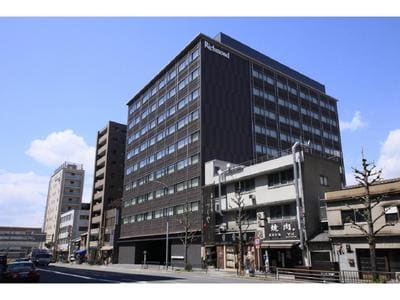
-13%90-Day Low
95565-3 Kita Fudondo-cho, Shimogyo-ku★★★
4.7(3,326)Comparing 4 booking sites
Richmond Hotel Premier Kyoto Ekimae
vs 90d avg $131
Day 4Free Cancel
Agoda
$131
$115/ night
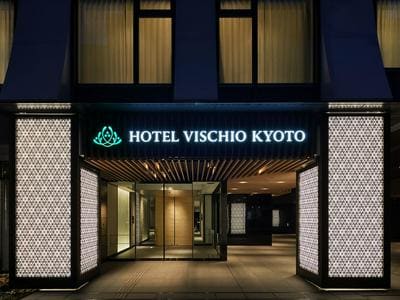
API Live
9344-1, Kamitonodacho, Higashikujo★★★★
4.7(211)Comparing 4 booking sites
Hotel Vischio Kyoto by GRANVIA
Checked 2026-12-09
Day 2Free Cancel
Agoda
$196/ night
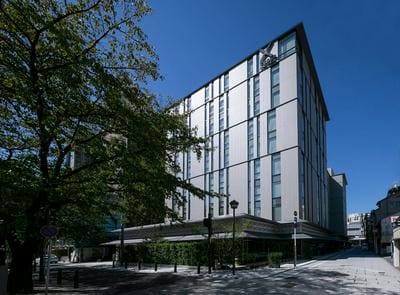
API Live
9371-1 Daikokucho, Kawaramachi-dori★★★
4.8(364)Comparing 4 booking sites
Cross Hotel Kyoto
Checked 2026-12-09
Day 2Instant
Agoda
$155/ night
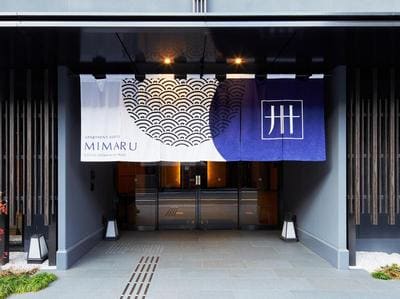
API Live
93105, Machigashiracho★★★★
4.8(1,612)Comparing 4 booking sites
MIMARU Kyoto Shinmachi Sanjo
Checked 2026-12-09
Day 2Free Cancel
Agoda
$210/ night
More 90-Day Price Charts to Compare
API Live
70Kyoto Popular Experience
5.0(7)Comparing 2 booking sites
[Private car tour/No additional charge!] Kyoto private car tour/VIP course with parents & children
Checked 2026-11-08
Day 1Free Cancel
Klook
$86/ ticket

-14%90-Day Low
98Tokyo Popular Experience
4.8(450)Comparing 2 booking sites
Tokyo Disney Resort 1-Day Passport Ticket
vs 90d avg $39
Day 4Free Cancel
Klook
$39
$33/ ticket

-3%90-Day Low
86Osaka Popular Experience
5.0(2)Comparing 2 booking sites
Universal Studios Japan 1-Day Studio Pass
vs 90d avg $24
Day 4Free Cancel
Klook
$24
$24/ ticket

-4%90-Day Low
86Osaka Popular Experience
4.8(17)Comparing 2 booking sites
Universal Studios Japan 1-Day Studio Pass
vs 90d avg $56
Day 4Free Cancel
Klook
$56
$54/ ticket