Hanwoo, Ssambap & Pastry
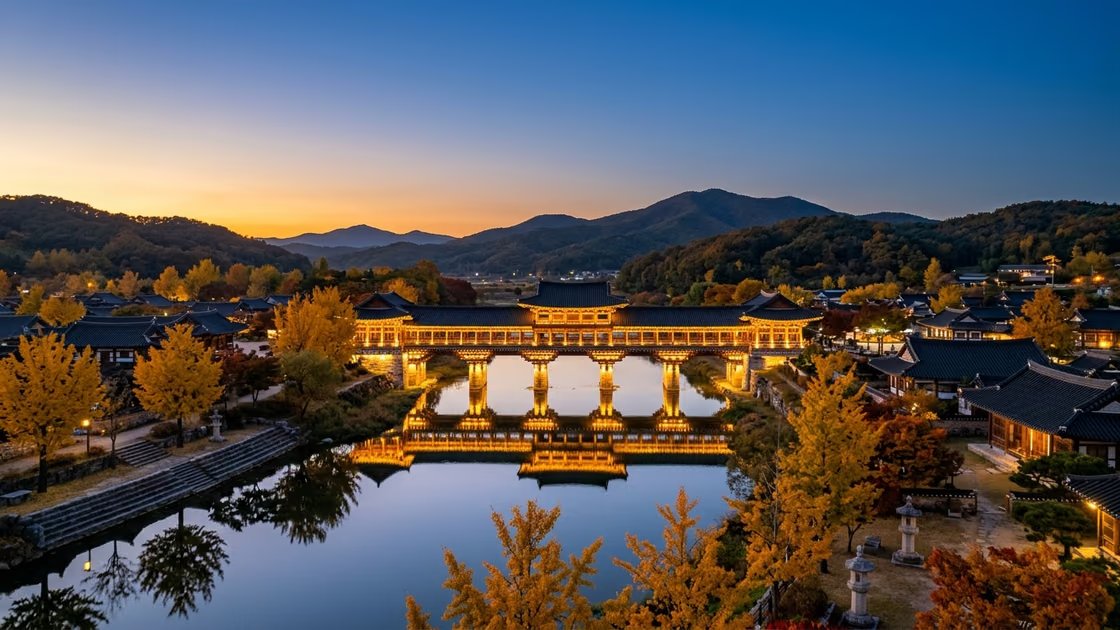
Bomun Lake luxury resorts, Hwangnidan-gil hanok stays & heritage passes
220V / 60Hz Type C / Type F recessed circular outlets. Traditional wooden Hanok guesthouses often place only one or two low wall sockets near the floor baseboard—pack a multi-port GaN block and a 2m cable.
Set in an inland basin surrounded by open royal plains, Gyeongju bakes hotter than Seoul in summer and drops briskly by 10°C+ after sunset in spring/autumn—bring a cardigan or light jacket for night palace walks.
KTX trains arrive at **Gyeongju Station** (formerly called Singyeongju, 20 min bus/taxi from downtown; the old downtown station closed permanently). Use T-money/WOWPASS for buses 50/51/60/70, Kakao T for cabs, and CatchTable for Hwangnidan-gil queues.
Locked in a solid hotel rate? Time your travel gear too — check real 90-day AliExpress price history on ChartBuy before you overpay at the airport.
Because Gyeongju’s royal mounds, Cheomseongdae pink muhly fields, Gyochon Village, Woljeonggyo, and Wolji Pond connect seamlessly across flat gravel paths, almost everyone walks double their usual step count!
Authentic local dining spots and independent cafes clustered around top hotel neighborhoods, linked directly to mobile map apps.

Tap each step to track your e-Arrival QR, transit reservations, and suitcase essentials. Progress saves automatically in your browser.
Saved locally in your browser
Gyeongju sits ~2h 10m from Seoul and just ~33m north of Busan by KTX, making it an easy stopover between the two cities. Note on Korail that "Singyeongju" was officially renamed **Gyeongju Station**.
KORAIL Official BookingLove walking straight out to cafés and lit palaces at night? Pick Hwangnidan-gil (check room photos to see if it has raised mattresses or traditional floor bedding `yo`). Traveling with kids or a car? Pick spacious Bomun Lake resorts.
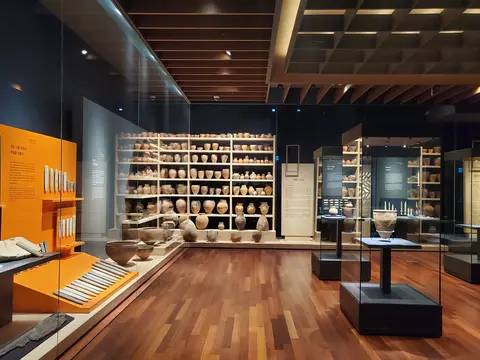
Admission to the Silla Gold Crown gallery at **Gyeongju National Museum** is 100% free (closed Mondays unless a holiday!). Install CatchTable Global for Hwangnidan-gil lunch queues and load T-money/WOWPASS before leaving Seoul or Busan.
Strolling from Daereungwon tombs past Cheomseongdae to Woljeonggyo Bridge easily clocks 18,000+ steps on gravel and grass, while Hanok tearooms and stays require slipping shoes off at wooden thresholds.
How to explore Korea’s thousand-year Silla capital on foot and by KTX—from royal grass burial mounds and Hwangnidan-gil cafés to glowing reflections at Donggung Palace and Wolji Pond.
Traditional Hanok rooms feature toasty **ondol** radiant heated floors that dry indoor air overnight—keep water beside your futon or drape a damp towel. Free disposable toothbrushes are banned across all Korean hotels.
Gyeongju’s best photos happen AFTER dark at Donggung Palace & Wolji Pond and Woljeonggyo Bridge—shooting 3-second smartphone Night Mode reflections drains batteries right after all-day CatchTable and map use.
Around Cheomseongdae, Hwangnyongsa Temple Site, and Wolseong Moat, strict heritage preservation means miles of open grass with almost zero tall shade trees—midday sun from May through September feels intense.
Timber-beam Hanok rooms preserve exposed wooden pillars, meaning power sockets sit tucked in one far corner near the floor—an extra-long cable + multi-port GaN block lets everyone charge right beside their pillow.
경북 경주시 불국신택지7길 6
경북 경주시 영불로 261
경북 경주시 불국신택지7길 10
경북 경주시 불국신택지7길 10
경북 경주시 진현로2길 54
경북 경주시 진현로2길 49
경북 경주시 불국신택지4길 11
경북 경주시 영불로 262
Direct KTX from Seoul Station (~2h 10m) or Busan Station (~33m) to Gyeongju Station, then city express bus 50/51/60/61 (to Hwangnidan-gil, ~20m) or 700 (to Bomun Lake, ~35m)
Fastest rail link bridging Seoul, Gyeongju, and Busan on one itinerary
Direct buses from Busan (Nopo Terminal, 50m), Gimhae International Airport (PUS, ~70m), Daegu, or Seoul Express Terminal land right beside Hwangnidan-gil at Gyeongju Bus Terminal
Flying directly into Busan Gimhae Airport (PUS) or staying around Hwangnidan-gil without extra transfers
Rent right outside KTX Gyeongju Station (physical 1949 IDP required for foreigners) to combine Bulguksa Temple, Seokguram Grotto mountain road, Bomun Lake, and Gampo’s East Sea columns
Families staying at Bomun Lake resorts or travelers adding Gampo’s ocean coast
Low-slung clay-tile roofs, courtyard bakeries, private outdoor-jacuzzi Hanok stays, and zero tall buildings—you can walk straight to Daereungwon tombs, Cheomseongdae Observatory, Woljeonggyo Bridge, and Wolji Pond after dinner.
Manicured lakeside boulevard lined with modern 5-star hotels, heated indoor/outdoor pools, spring cherry blossom tunnels, Hwangnyongwon’s 9-story wooden pagoda view, and Gyeongju World theme park.
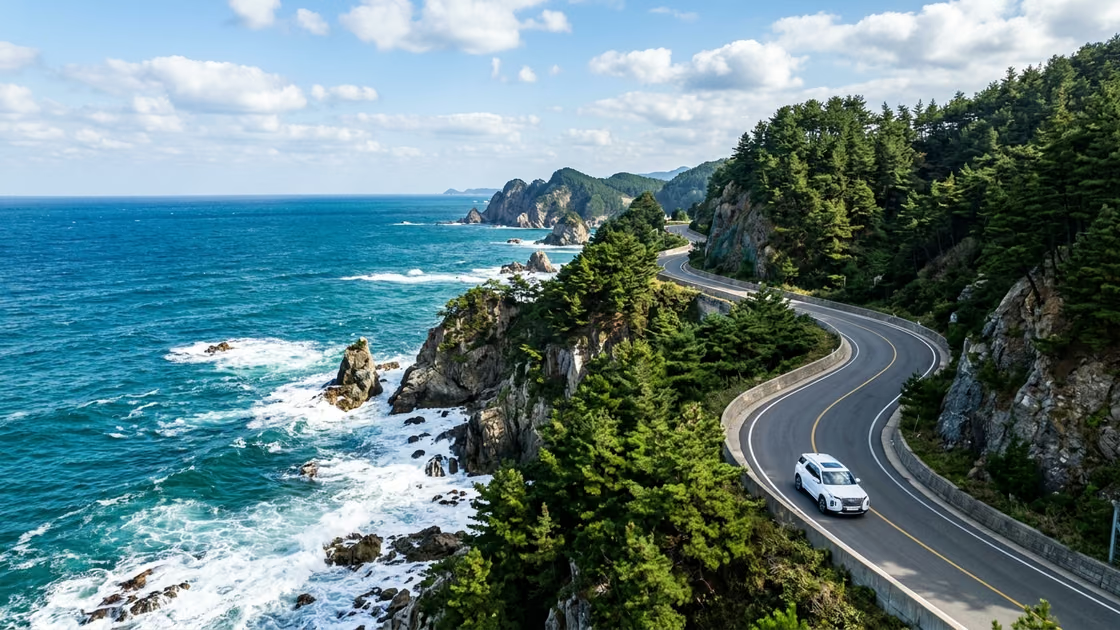
Many travelers forget Gyeongju has 40 km of rugged East Sea coastline! Just 35 minutes past Bulguksa lie King Munmu’s Underwater Tomb, fan-shaped Yangnam Basalt Columns, pine-cliff gameunsaji pagodas, and quiet ocean pool villas.
Naver Map (bus 50/60/10/11 live arrivals & walking paths through tomb parks), CatchTable Global (Hwangnidan-gil lunch queues), KORAIL Talk, Kakao T.
Never climb or step onto the grassy slopes of royal burial mounds (`gobun`)—they are sacred UNESCO tombs protected by national heritage law with heavy fines! Always remove shoes before stepping onto wooden `maru` verandas in Hanoks.
Renting cute 2- or 3-wheeled electric scooters/buggies around Hwangnidan-gil? By Korean road law, motorized scooters require a valid motorcycle/1949 IDP license, helmets, and are **strictly banned inside pedestrian-only tomb parks**—stick to regular pedal bicycles (`Tasilla` city bikes cost ~1,000 KRW!) to avoid accidents and fines.
Emergency 119 (medical/fire), 112 (police), and 1330 Korea Travel Helpline (24/7 multilingual support). Multiple `약` (`Yak`) pharmacies cluster along Jungang Market / Gyeongju Bus Terminal, with 24/7 CU/GS25 convenience stores everywhere.
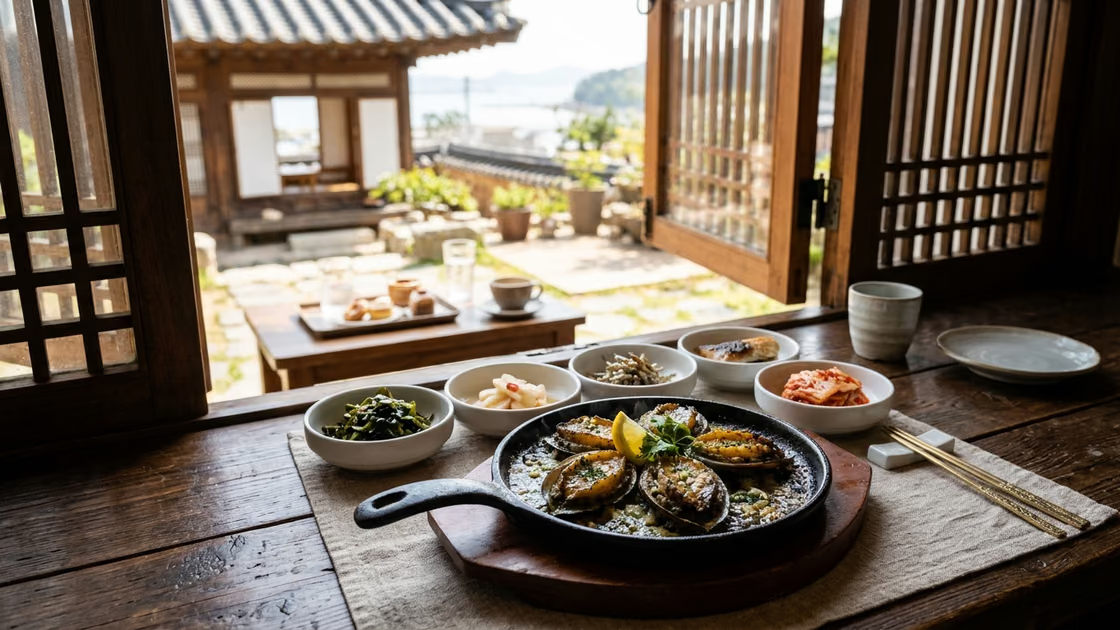
Gyeongju’s table blends royal abundance with viral street snacks: right outside Daereungwon’s stone walls, traditional **Ssambap** restaurants cover your entire wooden table with 15+ seasonal side dishes and fresh leafy greens for wrapping smoky bulgogi or braised mackerel (`~16,000–20,000 KRW` per person, minimum 2 orders). Local beef lovers swear by **Gyeongju Hanwoo Yukhoe & Hanwoo Mulhoe**—marbled Korean raw beef julienned with crisp Asian pear inside an icy sweet-spicy broth—while **Gyori Gimbap** wraps thin egg-omelet strips around savory rice.
Strolling down **Hwangnidan-gil**, grab a piping-hot stretchy mozzarella **10-Won Bread** (stamped like the 1966 ten-won coin featuring Bulguksa’s Dabotap Pagoda!) and rest your feet in a pine-courtyard Hanok roastery café. Buying red-bean **Hwangnam Bread** (`Hwangnambbang`, baked here since 1939) as a gift? Skip street knockoffs and visit the official **Choi Yeong-hwa Bakery flagship** near Daereungwon—boxes come out warm from the oven all day.
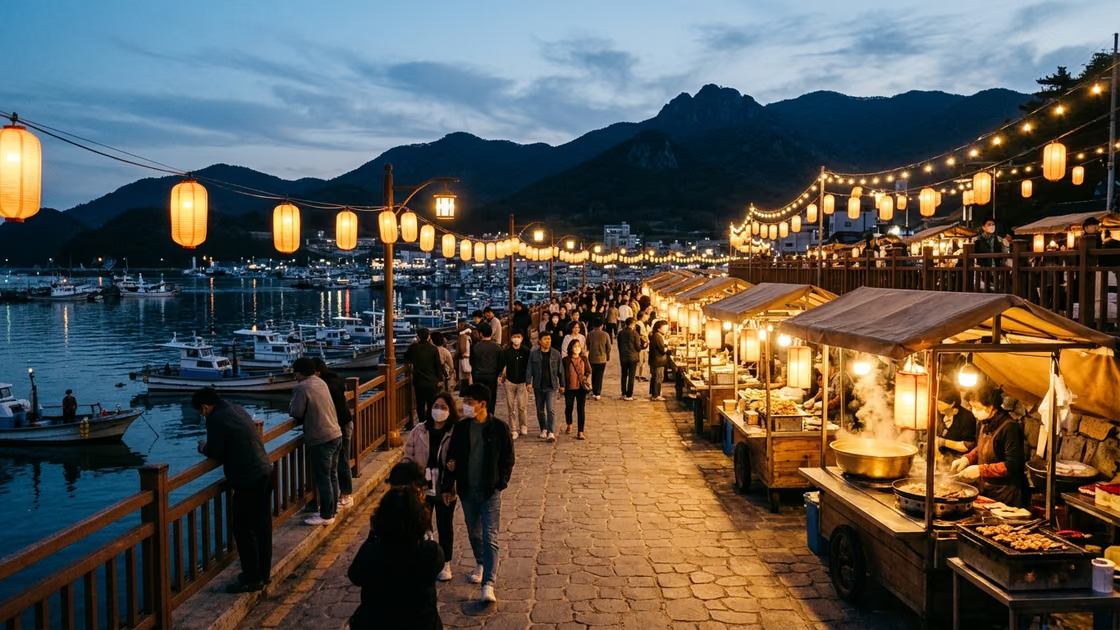
For a calmer, authentic night market meal away from afternoon café crowds, walk 12 minutes north to **Jungang Market (`야시장`)** after 6:30 PM—vendors grill pork belly rolls, tteokgalbi, and bindae-tteok under lantern-lit canopies.
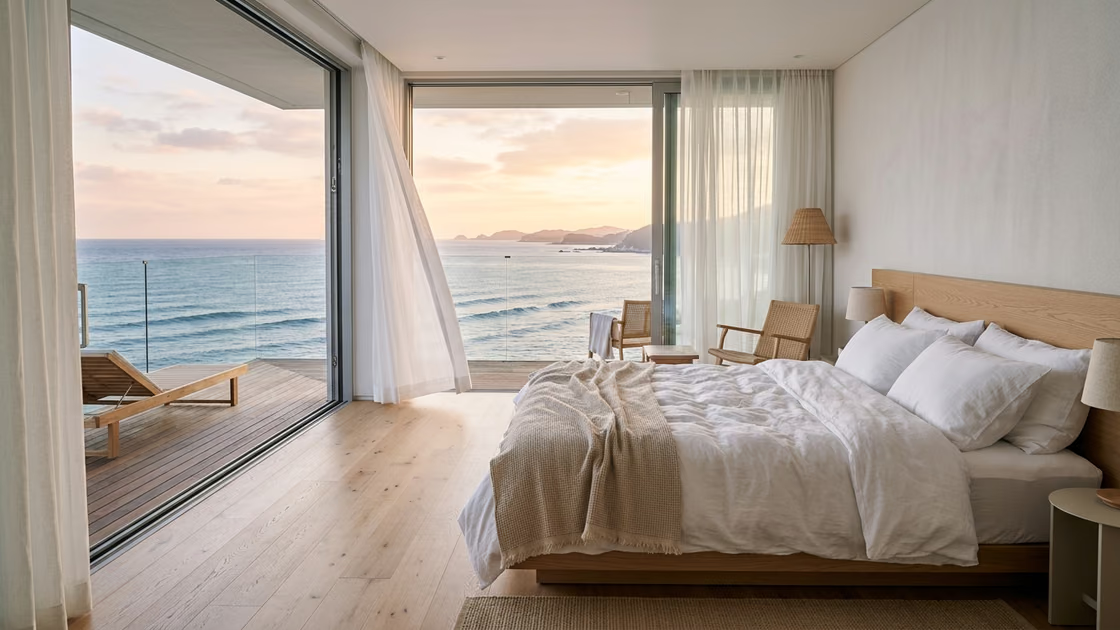
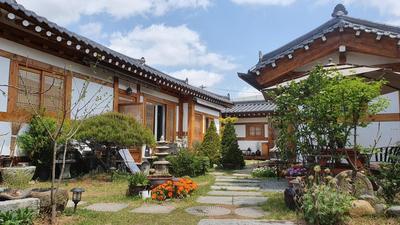
Modern Gyeongju **Hanok stays** around Hwangnam-dong and Gyochon blend 8th-century aesthetics—curved dark roof tiles, cedar rafters, and gravel tea courtyards—with modern en-suite rain showers, air-conditioning, and often sunken stone outdoor jacuzzis! Before clicking book, check three practical details: **1) Bedding type** (thick traditional floor futons `yo` on heated ondol floors vs. raised wooden platform beds if you have stiff knees), **2) Bathroom location** (100% private indoor bath vs. historic courtyard-access bath), and **3) Acoustic privacy** (`dokchae` single-family courtyard vs. shared multi-room guesthouse).
Prefer elevators, king spring mattresses, heated swimming pools, and zero alley parking stress? Base yourself 15 minutes east at **Bomun Lake Tourist Complex**, where lakeside resorts face Hwangnyongwon’s illuminated 9-story wooden pagoda and put you halfway to **Bulguksa Temple** and **Seokguram Grotto** for early morning UNESCO visits.
Never drag rolling suitcase wheels across a Hanok’s raised wooden veranda (`maru`) or indoor paper-laminated heated floor (`jangpan`)—lift bags over the threshold to prevent tearing the traditional floor finish!
First, clear up an outdated blog myth: the old downtown train station closed permanently in late 2021, and the high-speed KTX station outside town (formerly called *Singyeongju*) was officially renamed **Gyeongju Station**! Right outside the KTX arrival hall, frequent express city buses **50, 51, 60, and 61** drop you at Gyeongju Bus Terminal / Hwangnidan-gil in ~20 minutes (`tap T-money or WOWPASS`), while bus **700** heads straight to Bomun Lake and Bulguksa.
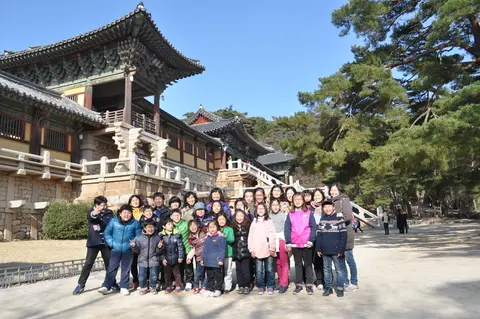
Once in town, two golden circular routes—**Bus 10 and Bus 11**—connect Downtown → Daereungwon → Wolji Pond → Gyeongju National Museum → Bomun Lake → **Bulguksa Temple** in opposite clockwise/counter-clockwise loops (just check which direction goes shorter on Naver Map!). From Bulguksa’s parking lot, catch **Mountain Shuttle Bus 12** departing on the hour up winding Mount Toham curves to **Seokguram Grotto** so you skip a steep hike.
Always check Bus 12’s departure minute BEFORE entering Bulguksa Temple—timing your temple stroll to finish 10 minutes before the hourly shuttle up to Seokguram saves a 50-minute wait!
Honestly, Gyeongju comes alive most vividly AFTER sunset—in few places on earth can you walk freely among illuminated 1,300-year-old monuments until 10:00 PM! Start at dusk along **Cheomseongdae** (Asia’s oldest surviving astronomical tower, free entry!) while the sky turns deep cobalt, stroll 10 minutes south through **Gyochon Village** to step out onto the river stepping-stones in front of **Woljeonggyo**—a monumental two-story wooden Silla corridor bridge reflected mirror-flat across the Namcheon Stream.
Finish at the crown jewel, **Donggung Palace and Wolji Pond** (`entry ~3,000 KRW`, last ticket 9:30 PM, lights off 10:00 PM). Skip the bottlenecked 7:30 PM tour-bus rush right at lights-on: arriving around **8:30–8:50 PM** gives you calm water, half the crowd at Pavilion 1’s railing, and time afterward for a local craft ale or `beopju` rice liquor back on Hwangnidan-gil.
Stepping across the river stones in front of Woljeonggyo Bridge at night? Turn on your phone flashlight between stones—gaps carry shallow running water that’s easy to misjudge while staring up at the lit bridge!
Since Busan to Gyeongju takes just **33 minutes by KTX** (or 50m by bus), a day trip works great—just book a ~9:30 PM return KTX so you don’t miss **Donggung & Wolji Pond lit up after dark**! That said, sleeping 1 night in a quiet Hwangnidan-gil Hanok lets you enjoy misty morning royal tombs with zero crowds.
After the old downtown rail line closed permanently, South Korea officially renamed *Singyeongju Station* to simply **Gyeongju Station (`경주역`)** in 2023. Select **Gyeongju** when booking KTX or SRT, then hop Bus 50/51/60 or a 20-minute taxi into the historic center.
Gyeongju is remarkably affordable: **Cheomseongdae Observatory**, **Woljeonggyo Bridge**, outer **Daereungwon tomb paths**, and the world-class **Gyeongju National Museum** (Silla gold crowns!) are **100% free**, while **Donggung & Wolji Pond** (`3,000 KRW`) and **Bulguksa Temple** require only small walk-up fees with no advance booking needed.