UNESCO Gastronomy Secrets
Jeonju Hanok Village courtyard stays, boutique hotels & foodie walks
220V / 60Hz recessed round two-pin Type C / Type F sockets. Heritage timber-frame Hanok rooms inside the village usually have only 1–2 low wall outlets—pack a multi-port GaN charger and long cable.
Flagstone lanes across 700+ Hanoks mean 15,000+ walking steps daily; inland Jeonju gets warm and sunny from May to September (bring a UV umbrella/fan) and crisp in winter when heated ondol floors shine.
Jeolla Line KTX reaches **Jeonju Station** (famous for its curved traditional roof!) in ~1h 40m from Seoul/Yongsan—book 1 month ahead on Korail. Use T-money/WOWPASS, Kakao T taxis (~15m to Hanok Village), and CatchTable.
New verified hotel price charts for this destination are syncing soon.
Locked in a solid hotel rate? Time your travel gear too — check real 90-day AliExpress price history on ChartBuy before you overpay at the airport.
Inside 80-year-old timber Hanok guesthouses, power outlets are scarce and sit low against the corner baseboard—one multi-port GaN block + 2m cable charges two phones and a camera right by your futon.
Authentic local dining spots and independent cafes clustered around top hotel neighborhoods, linked directly to mobile map apps.

Tap each step to track your e-Arrival QR, transit reservations, and suitcase essentials. Progress saves automatically in your browser.
Saved locally in your browser
At just ~1h 40m from Yongsan/Seoul Station, Jeonju works either as an effortless 1-night weekend escape or as a midday stopover on the same Jeolla KTX track down to Suncheon and Yeosu!
KORAIL Official BookingWant to step out onto silent tiled lanes at 7:00 AM before day-trippers arrive? Book right inside Hanok Village. Prefer thick hotel mattresses, elevators, and hip indie bars? Stay 10 minutes west in Weridan-gil/Gaeksa.
Nambu Market’s lively indoor Night Market runs **Friday and Saturday evenings only** (check seasonal hours if visiting weekdays!). Set up CatchTable Global for viral Jeonju Mulgalbi and Bibimbap queues.
Between Hanbok rental fitting rooms, Gyeonggijeon Shrine pavilions, tearooms, and Hanok bedrooms, you will slip your shoes off and on a dozen times—leave lace-up combat boots at home!
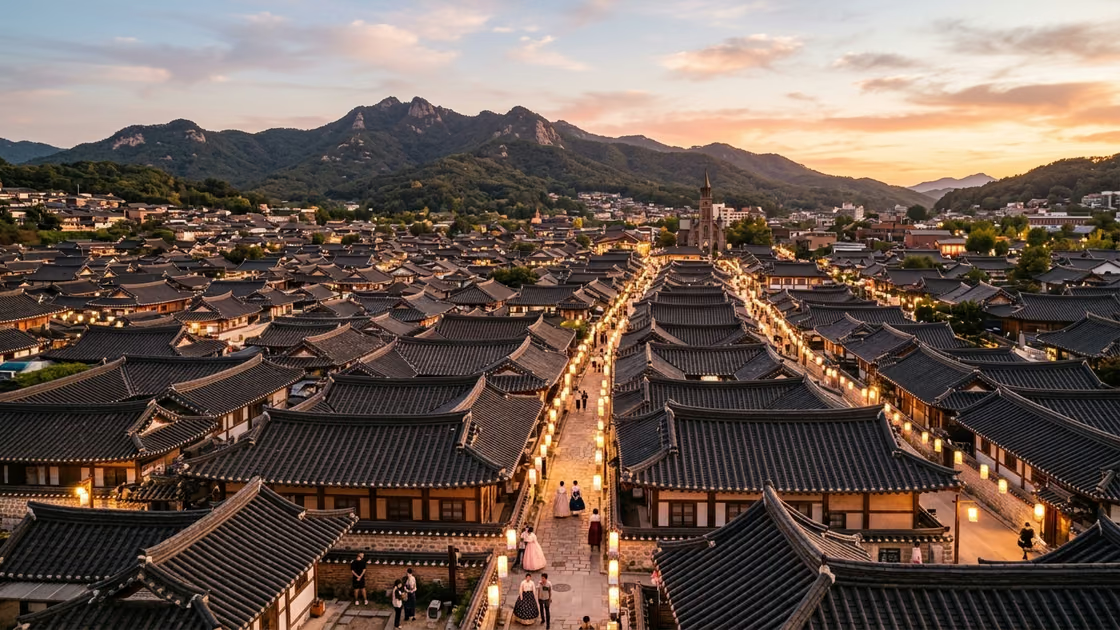
Just 1h 40m south of Seoul by KTX: how to navigate 700+ curved clay-tile roofs in Korea’s UNESCO City of Gastronomy, order kettle makgeolli feasts, and avoid tourist-trap snacks.
Most authentic Hanok Village stays use traditional floor futons (`yo`) over warm **ondol** radiant floors and wooden-paper doors—pack earplugs if you are a light sleeper, plus your own toothbrush kit.
Renting pastel Hanboks has tiny pouch space (`bokjumeoni`), yet shooting full-length bamboo-grove photos inside Gyeonggijeon Shrine and navigating alleys drains phones fast—ultralight pocket gear fits right inside a Hanbok bag!
Between tartare-topped Jeonju Bibimbap, 12-dish kettle Makgeolli tables, spicy Mulgalbi, and PNB Choco Pies—plus paper-door Hanok acoustics—this compact pouch covers every Jeonju quirk.
Multi-layered Hanbok skirts trap heat from May to October along sun-baked stone lanes, and almost nobody leaves Jeonju without bulky boxes of handmade PNB Choco Pies and roasted seaweed!
전북특별자치도 전주시 완산구 전주천동로 94
Direct KTX from Yongsan/Seoul Station (~1h 40m) to traditional Hanok-roofed Jeonju Station, then city bus along Cheonmajung-gil or a 15-minute taxi straight to Hanok Village
Fastest, traffic-proof rail trip from Seoul or easy stopover en route to Yeosu
Landing at Incheon Airport (ICN)? Direct limousine buses run straight to Jeonju (~3h 30m) with zero Seoul transfers! From Gangnam’s Central City Terminal (Honam Line), buses depart every 10–15 minutes (~2h 40m)
Budget-friendly wide seats from Gangnam or luggage-free direct transfer from ICN Airport
Inside Jeonju city no car is needed, ONLY rent a car at Jeonju Station (1949 IDP required) if heading 35m northeast into **Wanju’s Oseong Hanok Village & Awon House** (the serene mountain gallery where BTS filmed!) or Maisan Twin Peaks
Combining Jeonju Hanok Village with Wanju’s architectural mountain cafés
Korea’s largest urban cluster of traditional timber homes: wake up on warm ondol floors, sip morning tea on a wooden veranda, climb **Omokdae Pavilion** for sweeping grey-tile roof panoramas, and walk everywhere.
Just a 10-minute walk northwest across the main avenue from Jeondong Cathedral, **Gaeksa (`Gaekridan-gil`)** and **Weridan-gil** (former Wedding Street) buzz with 2030 locals, retro brick cafés, Jeonju’s iconic **Gamaek** beer shops, and modern hotels.
Spacious avenues, easy hotel parking, **Deokjin Park**’s wooden library pavilion floating over millions of July lotus blossoms (`Yeonhwajeong`), and quick 10-minute taxi hops to authentic **Seosin-dong Makgeolli Alley**.
Naver Map (alley walking routes & bus lines), KORAIL Talk (Jeolla Line KTX), CatchTable Global (Bibimbap & Mulgalbi waitlists), Kakao T.
Zero tipping anywhere. Many houses inside Jeonju Hanok Village are **private homes where residents actually live**—avoid peeking over low courtyard walls, never sit on private doorsteps for photos, and keep voices hushed after 10:00 PM.
Two smart Hanok Village watch-outs: **1)** Skip pricey generic cheese-skewer / octopus-stick stalls along the main tourist strip that taste identical to any carnival—save your appetite two blocks away for real `8,000–10,000 KRW` simmering **Kongnamul-gukbap**! **2)** Motorized 2/4-wheel electric buggies require a valid driver’s license/IDP, carry zero pedestrian collision insurance in crowded lanes, and trigger fines inside car-free zones—walk in comfortable shoes instead!
Emergency 119 (ambulance/fire), 112 (police), 1330 Korea Travel Helpline (24/7 multilingual). Pharmacies (`약`) line Pungnammun Gate / Nambu Market entrance and Gaeksa Chunggyeong-ro, alongside 24h CU/GS25 stores.
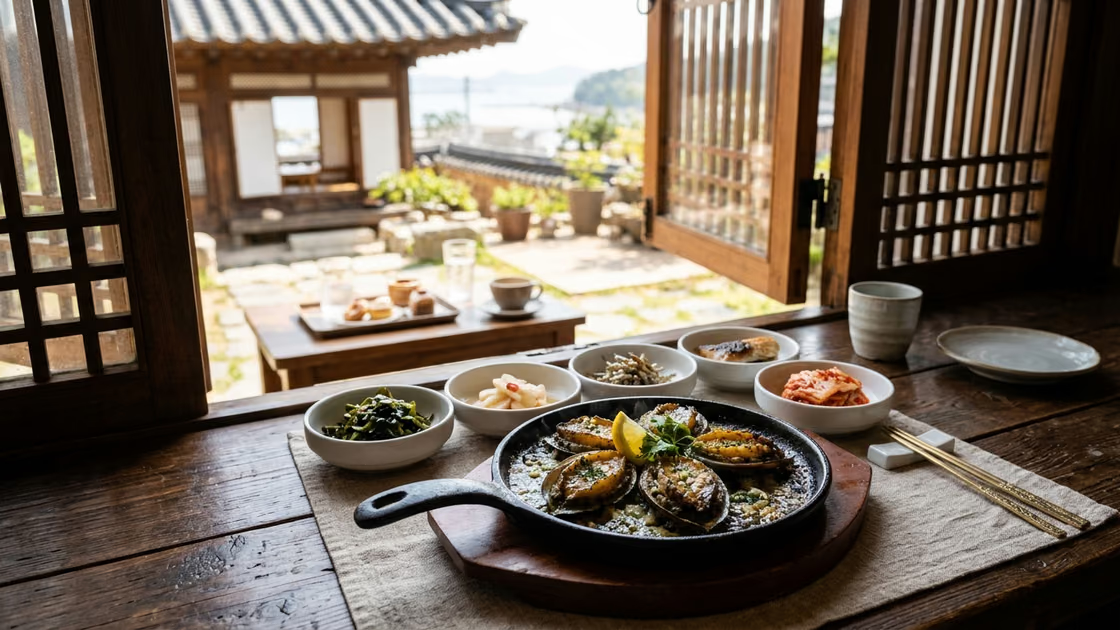
Designated a **UNESCO Creative City of Gastronomy**, Jeonju elevates **Bibimbap** by cooking rice in rich Hanwoo beef-bone broth rather than plain water and crowning a brass bowl (`yugi`) with golden mung-bean jelly (`hwangpo-muk`), ginkgo nuts, jujubes, and optional raw beef tartare (`yukhoe`)—use CatchTable ahead of peak weekend lunch! Yet ask any local about their favorite ritual and they’ll send you at 8:00 AM for **Jeonju Kongnamul-gukbap** (clear anchovy-kelp bean-sprout rice soup served two ways: mild boiled-in-pot *Nambu Market style* with a poached egg cup `suran` on the side, or boiled hard with squid!). Always add a `2,000 KRW` cup of warm **Moju**—sweet, alcohol-boiled-out cinnamon-jujube makgeolli that tastes like spiced dessert tea!
For a hearty dinner in Gaeksa/Weridan-gil, try **Jeonju Mulgalbi** (`전주 물갈비`)—tender pork ribs and glass noodles simmered under a mountain of bean sprouts in addictive savory-spicy red broth. Picking up Jeonju’s famous walnut-cream **Handmade Choco Pies** (`수제 초코파이`, baked since 1951)? Make sure the signboard says the original three letters **PNB (`풍년제과` 본점)** near Gaeksa or official Hanok Village branches rather than lookalike shops!
Never crack or stir your side poached egg (`suran`) directly into the hot Kongnamul-gukbap pot—that makes the clear broth cloudy! Spoon 4–5 tablespoons of broth + crushed seaweed INTO the tiny egg bowl and slurp it whole.
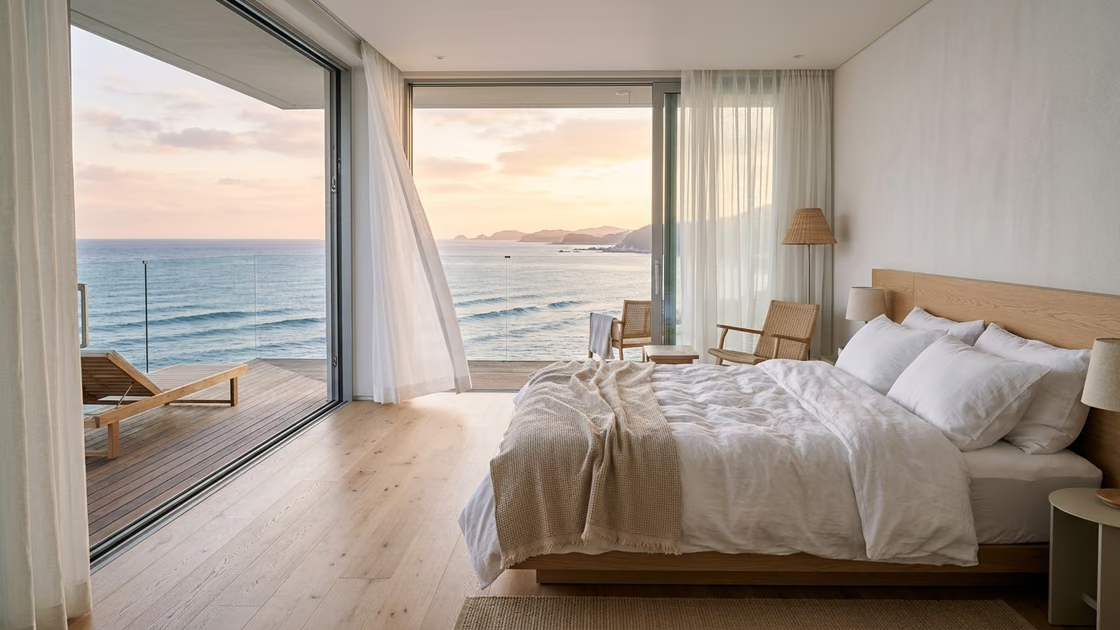
Unlike Seoul’s Bukchon (mostly steep residential lanes with few guesthouses), **Jeonju Hanok Village** lets you sleep right inside historic cedar-rafter courtyards at surprisingly gentle midweek rates (`~60,000–130,000 KRW`). Keep two authentic traits in mind: most traditional rooms spread thick cotton quilts (`yo`) directly across warm **ondol** heated floors rather than western beds, and sliding wooden-lattice doors (`changhoji`) mean courtyard footsteps carry—if you want spring mattresses and concrete walls, book a boutique hotel 10 minutes away in **Weridan-gil / Gaeksa** and walk over!
Make the most of staying overnight by heading up the short wooden stairs to **Omokdae Viewpoint** at 7:30 AM to photograph hundreds of overlapping charcoal-grey `giwa` roofs without a single crowd, then enter **Gyeonggijeon Royal Portrait Shrine** right at 9:00 AM opening—its towering green bamboo forest and vermilion palace gates next door to Romanesque **Jeondong Cathedral** are Jeonju’s #1 Hanbok photo backdrop.
Look up across Gyeonggijeon’s eastern stone wall toward **Jeonju Hyanggyo** (Confucian School)—in early November, its 400-year-old giant ginkgo trees carpet the entire courtyard in bright gold with **free admission**!
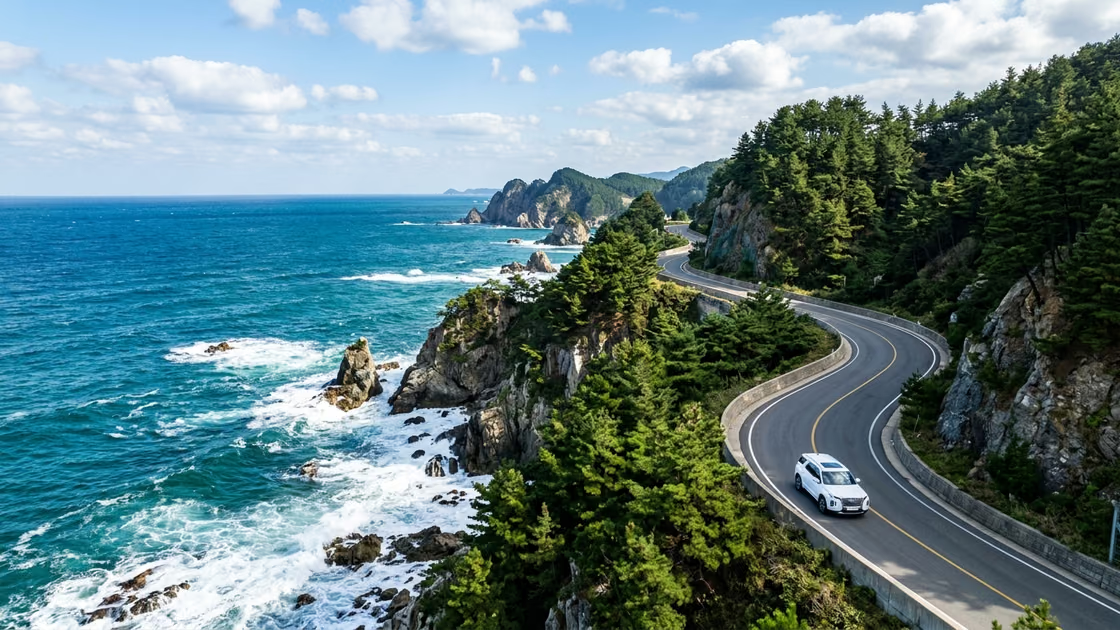
Stepping out of **Jeonju KTX Station**—freshly expanded while keeping its signature curved traditional roof—hop any city bus heading straight down tree-lined **Cheonmajung-gil (`첫마중길`)** toward **Jeondong Cathedral / Hanok Village** (`~20m`, tap T-money or WOWPASS), or split a metered Kakao T cab (`~7,500–9,000 KRW`, 15 minutes). Once dropped at the village gate, everything from Gyeonggijeon Shrine and Nambu Market to Jaman Mural Village and Weridan-gil connects purely on foot!
Driving into Jeonju on a Saturday, Sunday, or public holiday? Between **10:00 AM and 6:00 PM**, barricades block all cars from entering Hanok Village’s inner streets. Set your GPS directly to **Hanok Village Public Parking Lot 1 or 2 (`한옥마을 제1·2공영주차장`)** or take the free shuttle from **Daeseong Public Lot**—and remember to ask your Hanok host for a stamped stay voucher for **50% off public parking fees**!
Linking Jeonju and Yeosu on one trip? Toss your bags onto a mid-afternoon Jeolla Line KTX at Jeonju Station—you roll straight down to waterfront **Yeosu-EXPO Station in just 1 hour 20 minutes**!
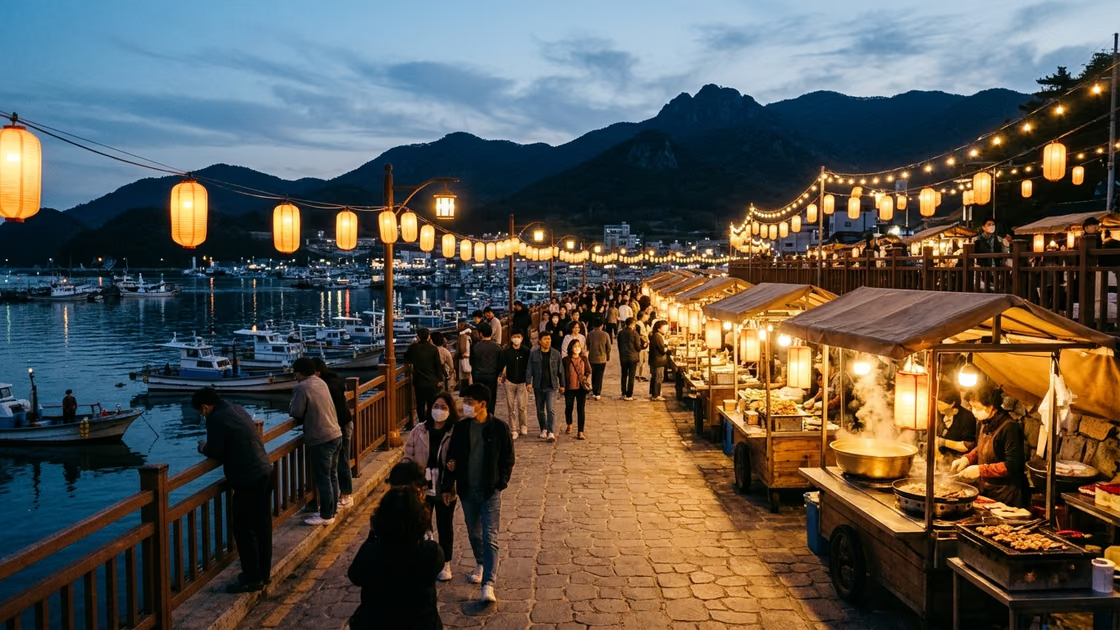
Nowhere else in Korea drinks quite like Jeonju after dark. First is **Jeonju Makgeolli Alley** (specifically **Seosin-dong** or **Samcheon-dong**, a 12-minute taxi from Hanok Village): you don’t order food off an à-la-carte menu—you simply order a battered aluminum **kettle of chilled rice wine (`한 주전자`, ~25,000–35,000 KRW)** or a 2-person set (`커플상`), and servers immediately cover your table with 10 to 15 hot dishes from kimchi pancakes, bossam pork, and grilled fish to soy crab and spicy soup! Order a second kettle and a whole new wave of elevated seafood dishes arrives.
Prefer ice-cold lager? Jeonju invented **Gamaek (`가맥`, short for *Gage Maekju* / corner-store beer)** in the 1980s! At legendary spots like **Jeonil Gabo (`전일갑오`)** or **Chojangjip** near Gyeonggijeon/Gaeksa, pull bottle beers straight from the fridge yourself for cheap retail-style prices while the owner hand-pounds dried Alaska pollack (`hwangtae`) over charcoal briquettes until paper-crisp—dip it into Jeonju’s addictive dark soy-garlic-chili-mayo sauce! Afterward, walk out onto **Cheongyeonru Pavilion (`청연루`)** spanning the Jeonjucheon Stream for warm wooden lantern views.
Visiting Makgeolli Alley as just 2 people? Look for spots offering a **"Couple Sang" (`커플상` / 2-person table)** in Seosin-dong so you aren’t overwhelmed by a 4-person banquet!
At **1h 40m each way by KTX**, a day trip from Seoul is totally doable! However, staying **1 night** unlocks Jeonju’s two best experiences that day-trippers miss: feasting at a **Seosin-dong Kettle Makgeolli Alley** or **Gamaek** beer shop at night, and walking misty, empty Hanok roofs from **Omokdae** at 7:30 AM.
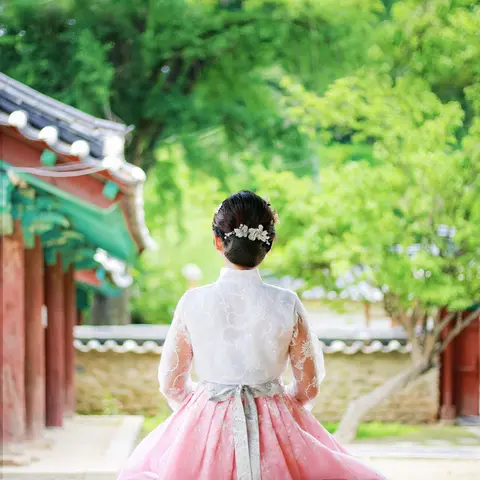
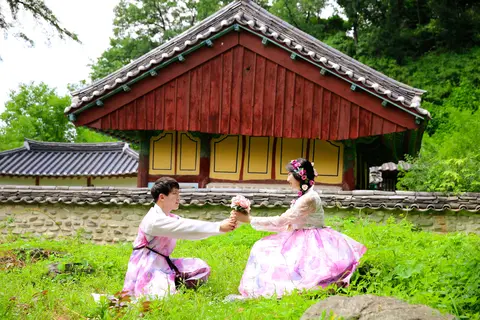
Dozens of Hanbok shops line the entrance to Gyeonggijeon Shrine—walk-ins are easy even on weekends, costing roughly **`15,000–30,000 KRW` for 2–3 hours** depending on classic silk vs. pastel lace styles (hair braiding and small `bokjumeoni` pouches are usually included!). Note that unlike Seoul’s palaces, **Gyeonggijeon Shrine charges its small `3,000 KRW` entry ticket** even when wearing Hanbok.
Look strictly for the three bold English letters **PNB (`Pungnyeon Bakery / (주)풍년제과`)**, founded in 1951! Several unrelated shops use similar Korean words (`풍년...`); visit the historic **PNB Main Store (`본점`) in Gyeongwon-dong** (5-minute walk toward Gaeksa) or official **PNB Hanok Village 1st–3rd branches**—and grab both the classic Walnut Dark Choco Pie and White Choco Pie!