Clear vs. Braised Beef Noodles, Soup Dumpling Technique & Navigating Star Anise
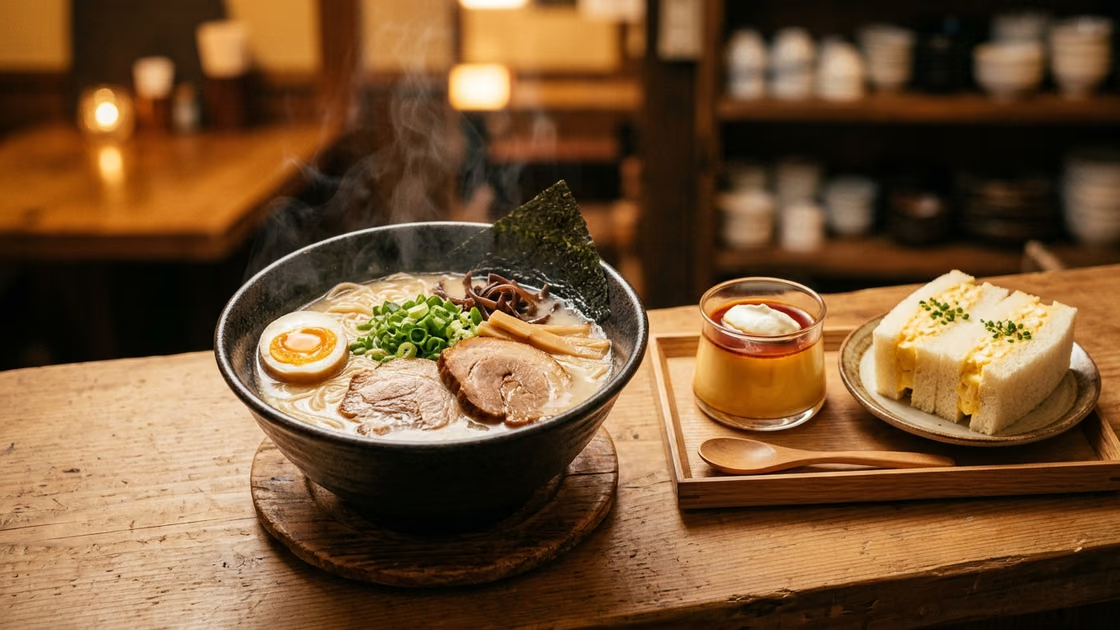
Taipei’s comfort food hits fast: steaming bamboo baskets of tissue-thin "xiaolongbao" soup dumplings, crispy Yongkang Street scallion pancakes with basil egg, and giant bowls of tender beef noodle soup. Two pro moves at the table: never pop a whole xiaolongbao straight into your mouth—rest it on your soup spoon, nibble a tiny vent hole to sip the rich pork broth with black vinegar and ginger threads first—and when ordering beef noodles, choose between spicy dark soy-braised ("hongshao") and clean, slow-simmered bone broth ("qingdun").
If you are sensitive to herbal aromas, watch for star anise ("bajiao"), five-spice powder, and fresh cilantro ("xiangcai"), which show up heavily in braised pork rice ("luroufan"), convenience store tea eggs, and stinky tofu alleys. Ordering "qingdun" clear beef noodles, fried rice with pork chop (Din Tai Fung style), and salt-and-pepper crispy chicken sidesteps star anise completely, and flashing "不要香菜 (Bu yao xiangcai)" politely keeps cilantro off your bowl.
Ordering bubble tea at 50 Lan, Kebuke, or Dejeng? Native Taiwanese rarely drink 100% sugar—ask for "Half sugar, less ice (半糖少冰 / Ban-tang shao-bing)" or "30% sugar (微糖 / Wei-tang)" so you actually taste the roasted oolong tea.